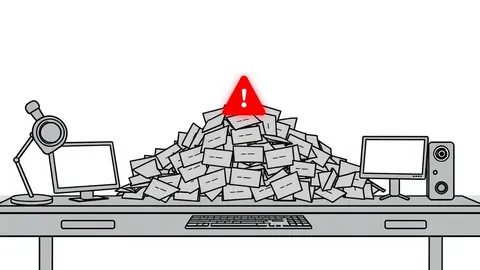
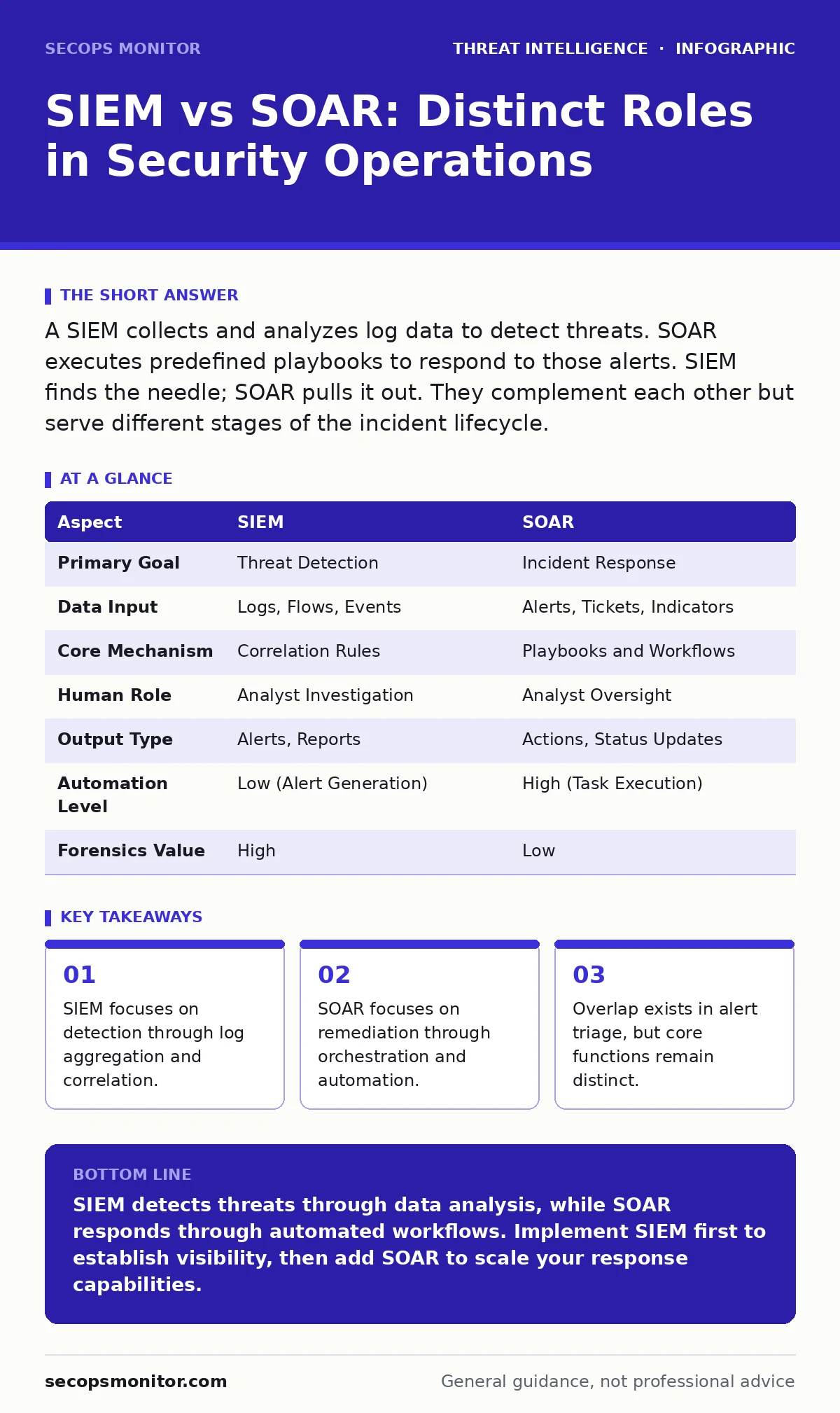
A SIEM collects and analyzes log data to detect threats. SOAR executes predefined playbooks to respond to those alerts. SIEM finds the needle; SOAR pulls it out. They complement each other but serve different stages of the incident lifecycle.
Detection Versus Action
The fundamental difference lies in the direction of data flow and the nature of the output. A Security Information and Event Management (SIEM) system ingests raw data from network devices, servers, and applications to identify anomalies. It acts as a central repository for forensic analysis and threat detection. Security Orchestration, Automation, and Response (SOAR) takes the alerts generated by tools like SIEMs and executes predefined workflows. It automates the repetitive tasks of incident handling, allowing human analysts to focus on complex decisions.
The Mechanics of SIEM
SIEM technology relies on the aggregation of logs and network traffic data. It normalizes this disparate data into a common format, enabling consistent analysis. Correlation engines apply rules to identify patterns that suggest malicious activity, such as multiple failed login attempts followed by a successful one from a new location. The primary value of a SIEM is visibility. It provides a single pane of glass to see what is happening across your infrastructure. Without this centralized view, detecting sophisticated attacks that span multiple systems is nearly impossible.
The Mechanics of SOAR
SOAR platforms connect to various security tools through APIs. They execute playbooks, which are step-by-step instructions for responding to specific types of incidents. When an alert triggers, the SOAR platform can automatically isolate a compromised endpoint, block an IP address, or create a ticket in your IT service management system. This reduces the mean time to respond, which is the average duration between detecting a threat and mitigating it. The primary value of SOAR is speed and consistency.
Functional Comparison
Understanding the distinct roles requires looking at specific operational aspects. The table below highlights the primary differences in function, output, and human involvement.
| Aspect | SIEM | SOAR |
|---|---|---|
| Primary Goal | Threat Detection | Incident Response |
| Data Input | Logs, Flows, Events | Alerts, Tickets, Indicators |
| Core Mechanism | Correlation Rules | Playbooks and Workflows |
| Human Role | Analyst Investigation | Analyst Oversight |
| Output Type | Alerts, Reports | Actions, Status Updates |
| Automation Level | Low (Alert Generation) | High (Task Execution) |
| Forensics Value | High | Low |
Choosing SIEM First
You should prioritize SIEM implementation if your organization lacks centralized visibility. You cannot automate a response to a threat you cannot see. SIEM is the foundation of modern security operations. Choose this path when you are still struggling to meet compliance requirements for log retention. It is also the right choice when your team is manually sifting through disparate log files to find security events. Building a robust detection capability is a prerequisite for effective automation.
See also: How TTPs Work: Mapping Adversary Behavior for Detection
Choosing SOAR First
It is rare to choose SOAR before SIEM, but you might prioritize it if you already have excellent detection but suffer from response bottlenecks. If your analysts spend most of their day performing repetitive tasks like blocking IPs or resetting passwords, SOAR can free them up. Choose this path when you have a mature security operations center with clear playbooks. It is also suitable when you face a high volume of low-severity alerts that require consistent, rapid handling. SOAR scales your team's capacity without adding headcount.
Areas of Overlap
The line between SIEM and SOAR is blurring. Many modern SIEM vendors now include basic SOAR capabilities, such as simple playbook execution. Conversely, some SOAR platforms include limited log management features. This convergence creates a gray area where it is difficult to determine which tool owns which function. You must evaluate the depth of each feature. A SIEM's automation may be limited to simple actions, while a SOAR platform can orchestrate complex, multi-step processes across dozens of tools.
Integration Strategy
Successful deployment requires tight integration between the two systems. The SIEM should feed validated alerts to the SOAR platform. The SOAR platform should write its actions back to the SIEM for audit trails. This closed loop ensures that detection leads to action, and action is recorded for forensic analysis. You must define clear ownership for each step. Decide which tool generates the alert, which tool executes the response, and which tool archives the evidence. Clear boundaries prevent operational confusion.
Key takeaways
- SIEM focuses on detection through log aggregation and correlation.
- SOAR focuses on remediation through orchestration and automation.
- Overlap exists in alert triage, but core functions remain distinct.
SIEM detects threats through data analysis, while SOAR responds through automated workflows. Implement SIEM first to establish visibility, then add SOAR to scale your response capabilities.
Frequently asked questions
Can I use SIEM without SOAR?
Yes, many organizations operate effectively with only a SIEM, relying on human analysts to investigate and respond to alerts manually.
Is SOAR a replacement for SIEM?
No, SOAR cannot detect threats on its own. It requires an input source like a SIEM to provide the alerts it automates.
Do I need both for compliance?
Compliance frameworks typically require log management and incident response capabilities, which SIEM and SOAR provide respectively.
How this guide was produced: written by the SecOps Monitor editorial team with AI assistance, checked against the public references listed below, and reviewed when the facts change. See our editorial policy or report an error.