
Cyber Attacks
Who Bears Legal Responsibility When AI Agents Cause Security Breaches?
As autonomous agents access external systems, liability remains with humans, but accountability frameworks are unsettled, creating compliance risks.
Cyber Attacks coverage from SecOps Monitor holds 29 articles, 19 of them reference guides. The newest was published on October 16, 2026. New stories are added as soon as they are confirmed, from more than 150 sources checked as often as every 45 seconds. Each story lists its sources. Primary sources we follow for this section include NIST Cybersecurity Framework and MITRE ATT&CK.
As autonomous agents access external systems, liability remains with humans, but accountability frameworks are unsettled, creating compliance risks.

A China-linked group exploited a critical flaw in BeyondTrust Remote Support to steal credentials and establish persistent control before patches were released.

Scans show AI software exposure surged 63% in nine months, while industrial control systems grew slowly but remain hard to identify.

Huntress research shows how attackers chain AI search traps with terminal commands to steal session cookies and execute business email compromise within a single day.

Federal raids on Texas residences reveal how remote IT workers hide behind US devices to defraud companies.

An engineer was arrested after planting a hidden recorder in a high-security meeting space, raising alarms about physical access controls.

Attackers intercept and rewrite your login page in real time, so you see a genuine site while they steal your credentials and session tokens instantly.
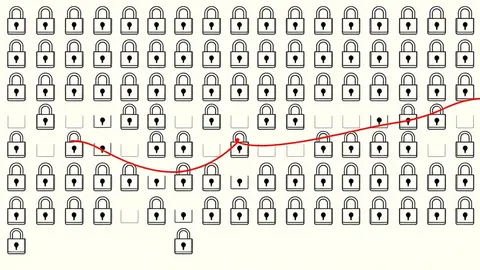
Attackers bypass lockouts by guessing one weak password against thousands of accounts, turning speed limits into a blind spot for your defenses.

Low-bandwidth HTTP requests can exhaust server thread pools, causing denial of service without triggering traditional volume-based intrusion detection systems.

Attackers rarely breach firewalls to steal payroll data; they manipulate trusted relationships and exploit fragmented approval workflows to redirect funds silently.

Your users will visit a malicious site if your brand name has only one letter difference from the attacker’s domain.

DDoS protection for game servers works by filtering traffic before it reaches your infrastructure, ensuring legitimate players connect while malicious packets are discarded at the network edge.

Typosquatting exploits human typing errors by registering lookalike domains that redirect traffic to malicious infrastructure before users notice the URL mismatch.

Bitdefender reports preinstalled firmware malware on low-cost devices enables silent app installation and ad fraud without user consent.

Bitdefender researchers found Midnight Mimosa hiding in MediaTek device firmware, enabling silent app control and fake ad revenue generation across 150 countries.

Internal network monitoring catches lateral movement that perimeter sensors miss, making interior placement a standard practice for modern defense.

DNS poisoning alters cached records to redirect traffic, while DNS spoofing forges packet identities to hijack active sessions or bypass authentication checks.

Cyberespionage group DarkBlinders deploys fake video conferencing software and abuses GitHub repositories to steal data from Israeli and Iraqi government entities.

Attackers exploit human patience by flooding devices with login prompts until a user approves one by accident or annoyance, bypassing second-factor checks.

Botnets hide in plain sight by using legitimate cloud services to mask command traffic, making simple port blocking ineffective against modern distributed threats.

Attackers manipulate psychological urgency to bypass logical checks, often using voice cloning or spoofed caller IDs to mimic trusted colleagues.

Most financial frauds fail not because of technology, but because attackers exploit the human tendency to obey authority under time pressure.

Misconfigured lockout thresholds turn routine password errors into a denial-of-service weapon that shuts down your entire authentication infrastructure.

Most training fails because it targets memory rather than behavior, ignoring the cognitive biases attackers exploit during high-pressure moments.