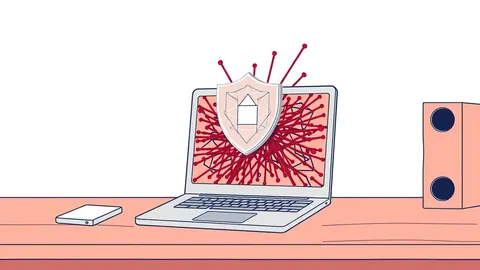
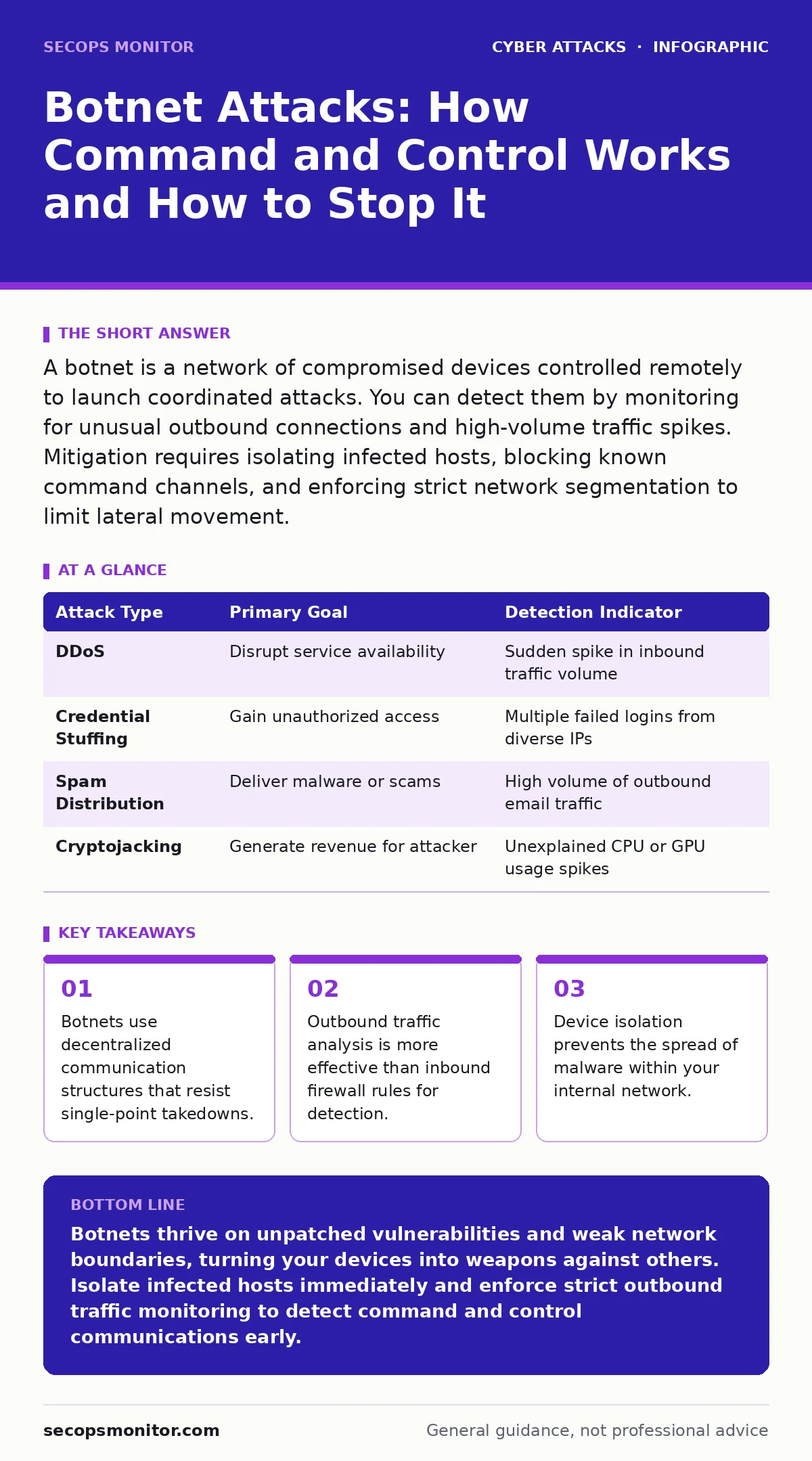
A botnet is a network of compromised devices controlled remotely to launch coordinated attacks. You can detect them by monitoring for unusual outbound connections and high-volume traffic spikes. Mitigation requires isolating infected hosts, blocking known command channels, and enforcing strict network segmentation to limit lateral movement.
What exactly is a botnet?
A botnet is a collection of internet-connected devices infected with malware that allows a remote attacker to control them simultaneously. Each infected device, called a bot, acts as a zombie that follows commands without the owner's knowledge. The attacker, known as a bot herder, uses these devices to perform large-scale tasks like sending spam or launching denial-of-service attacks.
How do attackers recruit devices into a botnet?
Attackers typically exploit unpatched software vulnerabilities or use stolen credentials to gain initial access. They may distribute malware through malicious email attachments or drive-by downloads on compromised websites. Once inside, the malware installs a persistent agent that connects back to the attacker's infrastructure. This process often bypasses basic defenses if the user clicks a link or opens an attachment, highlighting the need for rigorous security awareness training.
How does the command and control channel work?
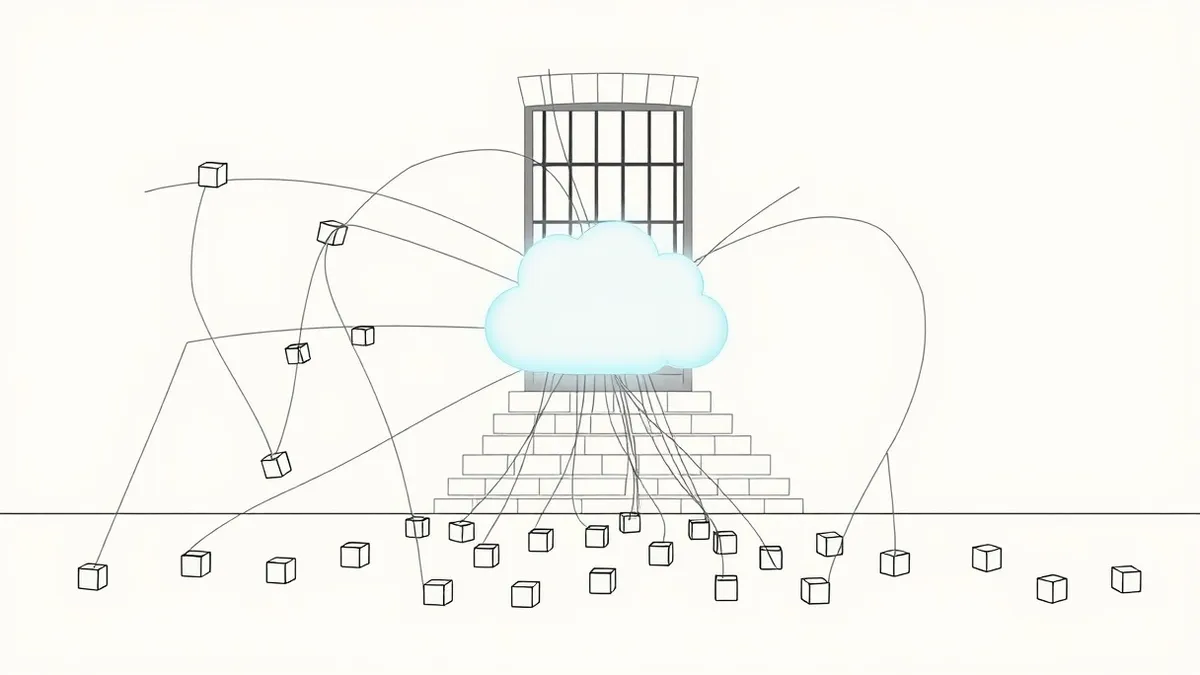
The bot contacts a command and control server to receive instructions and report status. Traditional botnets used a centralized server, but modern variants use decentralized methods like peer-to-peer networks or domain generation algorithms. Domain generation algorithms create thousands of random domain names, making it difficult to block the communication channel by blacklisting specific addresses. The bot checks these domains periodically to see if any resolve to an active server.
What are the most common uses for a botnet?
Attackers primarily use botnets for distributed denial-of-service attacks to overwhelm target servers with traffic. They also use them for credential stuffing, where they test stolen username and password pairs against various online services. This is similar to dictionary attacks but uses real, compromised credentials rather than generated guesses. Other uses include mining cryptocurrency or sending massive volumes of phishing emails.
| Attack Type | Primary Goal | Detection Indicator |
|---|---|---|
| DDoS | Disrupt service availability | Sudden spike in inbound traffic volume |
| Credential Stuffing | Gain unauthorized access | Multiple failed logins from diverse IPs |
| Spam Distribution | Deliver malware or scams | High volume of outbound email traffic |
| Cryptojacking | Generate revenue for attacker | Unexplained CPU or GPU usage spikes |
Why are botnets so difficult to dismantle?
Botnets are resilient because they distribute control across many devices and locations. Taking down one command server does not stop the botnet if it uses decentralized protocols. Attackers also use fast-flux DNS techniques, where the IP address associated with a domain changes rapidly. This makes it hard for defenders to block the source of the traffic or identify the actual server hosting the malware.
See also: What Is Ransomware Protection: How to Stop Encryption Attacks
How can you detect a botnet infection on your network?
Look for anomalous outbound traffic patterns that do not match normal business operations. A single device sending small amounts of data to many different destinations may indicate a bot communicating with a command server. Monitor for processes that consume excessive resources or run at unusual times. Implementing zero trust security principles helps by verifying every connection, regardless of its origin, which limits the damage a single compromised device can cause.
What happens when a botnet launches a DDoS attack?
The attacker instructs all bots to send traffic to a single target IP address simultaneously. This flood of requests consumes the target's bandwidth or processing capacity, rendering the service unavailable to legitimate users. The attack amplifies the volume of traffic using reflection techniques, where the bot sends requests to public servers that reply to the target. This makes the traffic appear to come from many legitimate sources, complicating mitigation efforts.
How do you respond to a confirmed botnet infection?
Isolate the infected device from the network immediately to prevent further communication with the command server. Do not simply shut it down, as this may destroy forensic evidence needed to understand the breach. Analyze the malware to identify the command and control domains and block them at the network perimeter. Then, rebuild the device from a clean image and reset all credentials that were stored on it. This process aligns with strong cyber hygiene practices that prioritize rapid containment and recovery.
How can you prevent botnet infections in the first place?
Keep all software and firmware updated to patch known vulnerabilities that bots exploit. Use network segmentation to limit the spread of malware between different parts of your infrastructure. Enforce strict account lockout policies to slow down brute-force attempts that might install bot agents. Regularly audit your network for unknown devices and ensure that internet-facing services are hardened against exploitation.
Key takeaways
- Botnets use decentralized communication structures that resist single-point takedowns.
- Outbound traffic analysis is more effective than inbound firewall rules for detection.
- Device isolation prevents the spread of malware within your internal network.
Botnets thrive on unpatched vulnerabilities and weak network boundaries, turning your devices into weapons against others. Isolate infected hosts immediately and enforce strict outbound traffic monitoring to detect command and control communications early.
Frequently asked questions
Can a single computer be part of a botnet?
Yes, a single compromised device is a bot, but the term botnet refers to the network of many such devices controlled together.
Do antivirus programs stop botnets?
Traditional antivirus may detect known bot malware, but it often misses new variants or decentralized command channels.
How do I know if my IP is in a botnet blacklist?
You can check public reputation databases, but if you are blocked, you likely have an infection that needs removal.
Are cloud servers safe from botnets?
No, cloud instances can be compromised and used as bots if they are not properly secured and monitored.
How this guide was produced: written by the SecOps Monitor editorial team with AI assistance, checked against the public references listed below, and reviewed when the facts change. See our editorial policy or report an error.