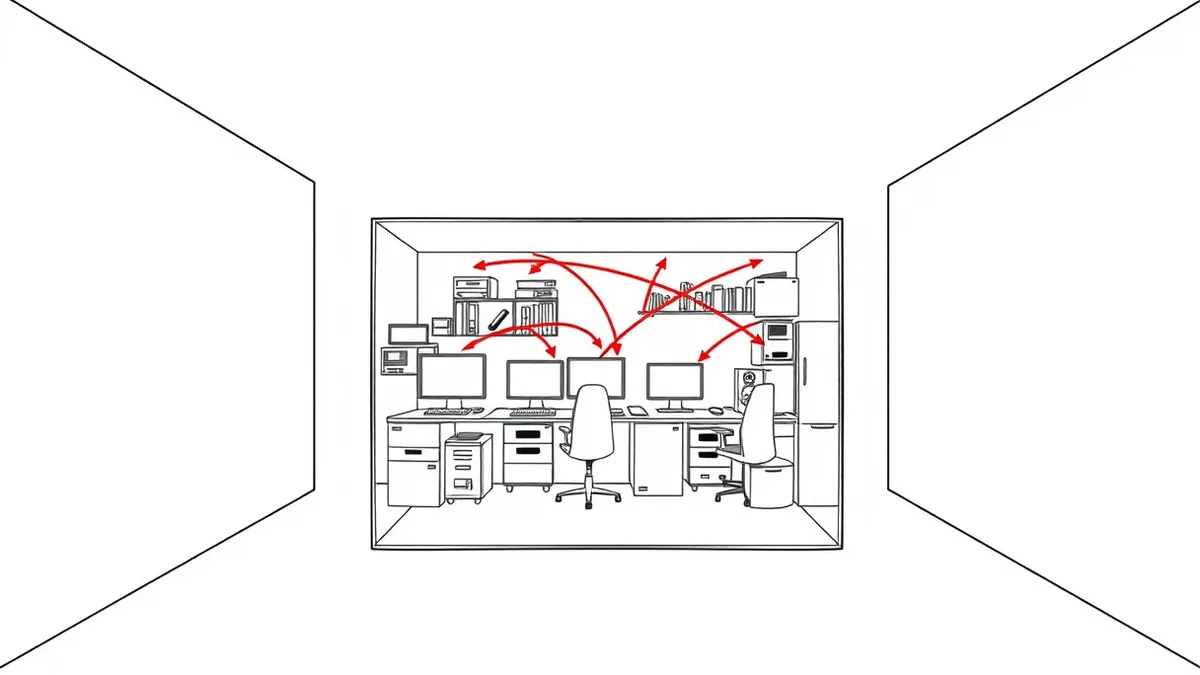
Intrusion detection systems are only used on the exterior is a false assumption. These tools monitor internal traffic to catch lateral movement, insider threats, and compromised hosts that bypass the firewall. Effective security requires sensors at the perimeter, within the data center, and on critical endpoints to see the full attack path.
Why You Need Sensors Everywhere
Imagine a castle with a single guard at the main gate. If an enemy sneaks in through a side window, the guard sees nothing. Intrusion detection systems operate on the same principle. Placing them only at the network edge leaves the interior blind. Attackers who bypass the perimeter can move freely between servers, steal data, and install malware without triggering any alarms. The network core becomes a dark zone where hostile activity goes unnoticed.
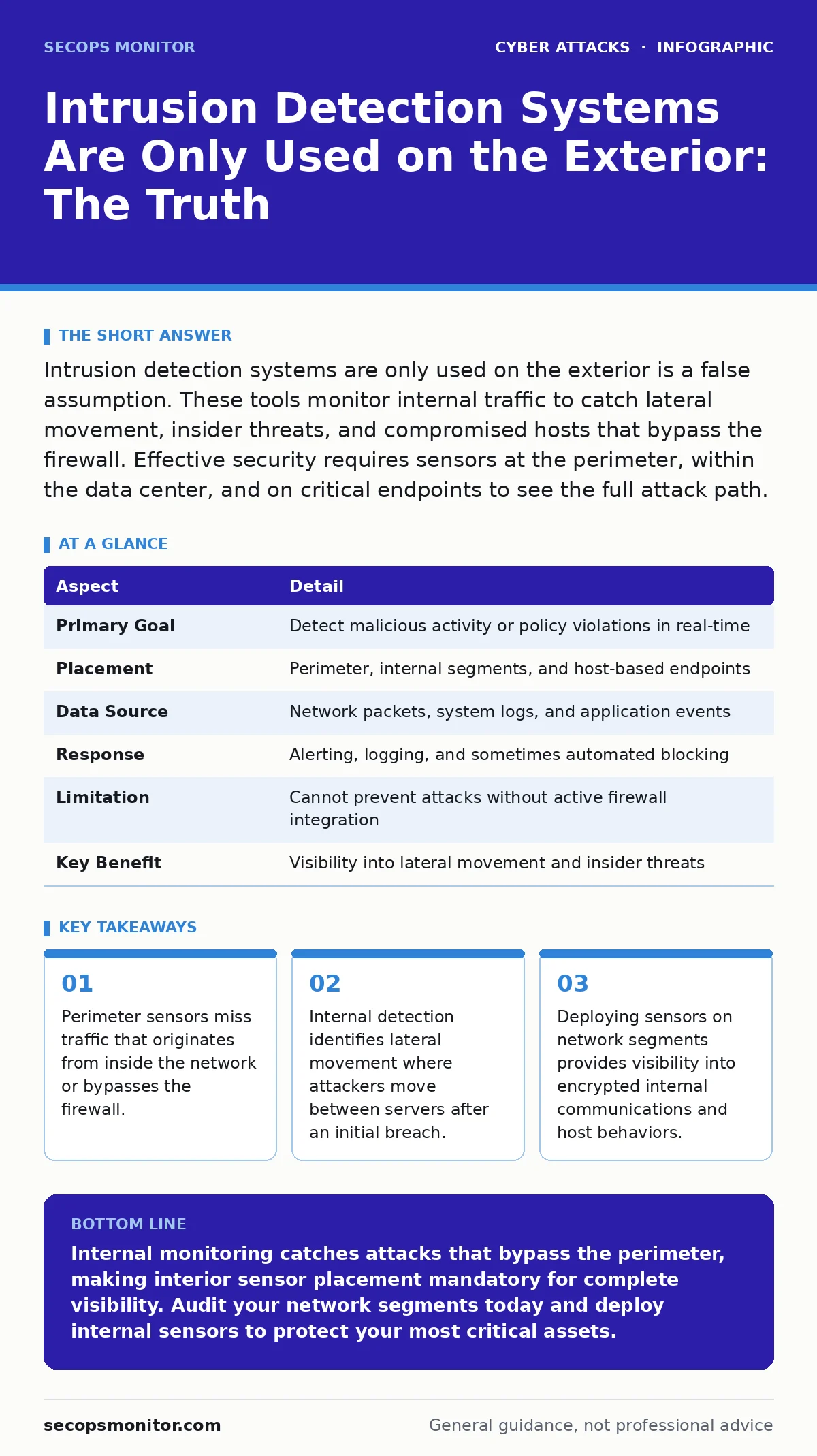
| Aspect | Detail |
|---|---|
| Primary Goal | Detect malicious activity or policy violations in real-time |
| Placement | Perimeter, internal segments, and host-based endpoints |
| Data Source | Network packets, system logs, and application events |
| Response | Alerting, logging, and sometimes automated blocking |
| Limitation | Cannot prevent attacks without active firewall integration |
| Key Benefit | Visibility into lateral movement and insider threats |
How Intrusion Detection Works
An intrusion detection system analyzes traffic or logs against known patterns of malicious behavior. Signature-based detection compares activity to a database of known attack signatures. If a packet matches a known exploit, the system raises an alert. This method is accurate for known threats but fails against new, unknown attacks. Anomaly-based detection establishes a baseline of normal behavior. It flags deviations from that baseline, such as unusual data volumes or access times. This approach catches novel attacks but generates more false positives. Hybrid systems combine both methods for broader coverage.
The Myth of Exterior-Only Monitoring
Many administrators believe that intrusion detection systems are only used on the exterior. This belief stems from early security models that focused solely on keeping outsiders out. Modern threats operate differently. Attackers often gain initial access through social engineering or compromised credentials. Once inside, they do not need to cross the perimeter again. They move laterally across the network, accessing sensitive databases and escalating privileges. Perimeter sensors cannot see this internal traffic. Without internal sensors, you only detect the initial entry, not the subsequent damage. This creates a dangerous illusion of security.
What Internal Sensors Reveal
Internal network sensors provide visibility into traffic that never touches the internet. They monitor communication between servers, workstations, and cloud resources. This visibility is critical for detecting lateral movement. Attackers use techniques like pass-the-hash to move between machines without passwords. Internal sensors can detect the abnormal authentication patterns associated with these techniques. They also identify command-and-control traffic that mimics normal protocols. By analyzing internal DNS queries and HTTP requests, sensors can spot beaconing behavior. This allows you to isolate compromised hosts before data leaves the network.
Host-Based Detection for Endpoint Visibility
Network sensors miss traffic that is encrypted or occurs on local loops. Host-based intrusion detection systems run directly on servers and workstations. They monitor system calls, file changes, and process execution. This provides visibility into activities that network sensors cannot see. For example, a host-based sensor can detect if a user modifies system files or disables security services. It can also identify rootkits that hide from network scans. Combining network and host-based detection creates a layered defense. This approach ensures that attackers cannot hide by encrypting their traffic or operating locally.
See also: What Is Ransomware Protection: How to Stop Encryption Attacks
Common Misconfigurations and Errors
Deploying sensors is only the first step. Misconfiguration leads to blind spots and alert fatigue. Many teams place sensors in the wrong network segments. They might monitor the DMZ but ignore the corporate LAN. This leaves the most valuable assets unprotected. Another common error is failing to update signature databases. Outdated signatures allow known exploits to pass undetected. Overly sensitive anomaly thresholds generate thousands of false alerts. This causes operators to ignore real threats. Proper tuning requires understanding normal network traffic patterns. Regular review of alerts ensures the system remains effective.
Integrating with Broader Security
Intrusion detection systems do not operate in isolation. They feed data into security information and event management platforms. This centralizes logs from firewalls, endpoints, and applications. Correlation rules connect disparate events into a single incident. For instance, a failed login followed by a successful one and then data access might indicate a breach.
Integration with DDoS protection systems helps distinguish between volumetric attacks and application-layer exploits. Understanding DNS spoofing techniques helps tune sensors to detect domain generation algorithms used by malware. Recognizing typosquatting domains in traffic logs can reveal early-stage phishing campaigns. This holistic view improves detection accuracy and response speed.
What To Do Next
Audit your current sensor placement. Identify critical assets that lack direct monitoring. Deploy internal sensors on network segments containing sensitive data. Enable host-based detection on servers and critical workstations. Tune alert thresholds to reduce noise. Integrate detection data with your central logging platform. Review alerts daily to identify patterns. Update signatures and baselines regularly. Test the system with controlled simulations to verify coverage. Ensure your team understands how to respond to different alert types. Continuous improvement is necessary to keep pace with evolving threats.
Key takeaways
- Perimeter sensors miss traffic that originates from inside the network or bypasses the firewall.
- Internal detection identifies lateral movement where attackers move between servers after an initial breach.
- Deploying sensors on network segments provides visibility into encrypted internal communications and host behaviors.
Internal monitoring catches attacks that bypass the perimeter, making interior sensor placement mandatory for complete visibility. Audit your network segments today and deploy internal sensors to protect your most critical assets.
Frequently asked questions
Can intrusion detection systems block attacks automatically?
Standard intrusion detection systems only alert on threats. Intrusion prevention systems can block traffic, but they require careful configuration to avoid disrupting legitimate business operations.
How do I reduce false positives from anomaly detection?
Establish a baseline during normal business hours. Tune thresholds gradually and whitelist known benign activities. Regular review of alerts helps refine the model over time.
Do I need sensors for encrypted traffic?
Yes. While you cannot decrypt traffic without keys, you can analyze metadata like packet size, timing, and destination. Host-based sensors provide visibility into decrypted activity on the endpoint.
How often should I update detection signatures?
Update signatures daily or as soon as new threats are identified. Delaying updates leaves your system vulnerable to known exploits that attackers actively use.
How this guide was produced: written by the SecOps Monitor editorial team with AI assistance, checked against the public references listed below, and reviewed when the facts change. See our editorial policy or report an error.