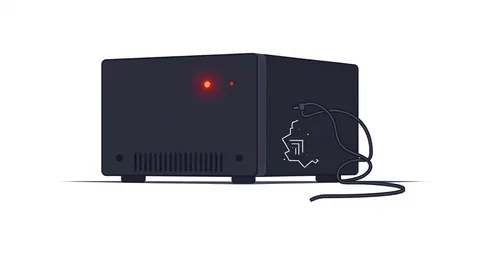
DDoS protection for game servers filters malicious traffic before it hits your hardware. It uses scrubbing centers to absorb attack volume and only forwards clean packets. This prevents server crashes and keeps latency low for legitimate players during high-volume floods.
Understanding the Core Mechanism
Imagine a narrow door that only allows one person through at a time. DDoS protection for game servers acts like a bouncer standing outside that door. The bouncer checks credentials and behavior before allowing entry. Without this filter, a crowd of aggressive individuals would block the door, preventing anyone from entering.
This mechanism separates legitimate user traffic from malicious noise. The bouncer does not stop the crowd from gathering, but it prevents them from obstructing the entrance. This distinction matters because you cannot stop the traffic at its source. The source is often thousands of distributed devices. You can only manage the traffic as it approaches your infrastructure.
| Aspect | Detail |
|---|---|
| Detection Method | Behavioral analysis and baseline comparison |
| Mitigation Location | Network edge or scrubbing center |
| Latency Impact | Minimal when using any-on topology |
| Attack Type Coverage | Volumetric, protocol, and application layer |
| Configuration Style | Signature-based and heuristic rules |
How Traffic Scrubbing Works
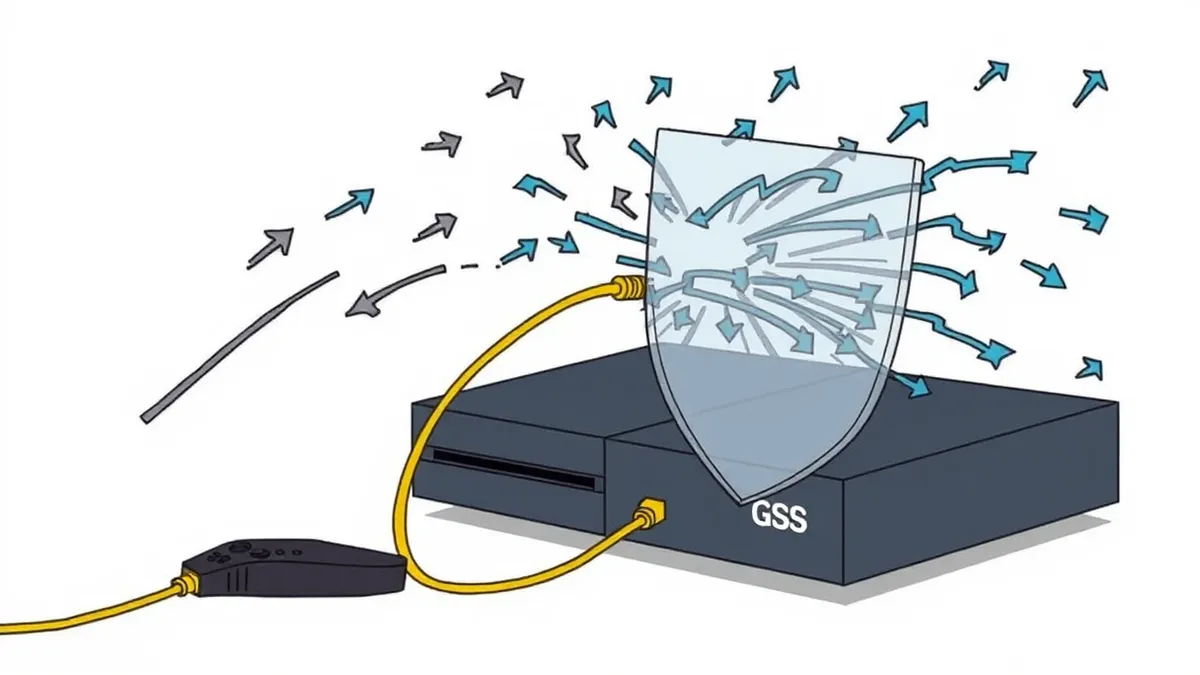
Traffic scrubbing is the process of inspecting packets before they reach your origin server. When an attack starts, your connection is redirected to a scrubbing center. This center has massive bandwidth capacity. It analyzes each packet against known attack patterns. Legitimate packets are forwarded to your game server. Malicious packets are dropped. This redirection happens automatically.
The scrubbing center acts as a buffer. It absorbs the shock of the attack. Your server only sees the clean traffic. This prevents resource exhaustion on your hardware. The scrubbing center handles the heavy lifting. Your server remains responsive. This separation is vital for maintaining performance. Without it, your server would spend all its resources processing fake requests. It would have no capacity left for real players.
Why Game Servers Are Unique Targets
Game servers require real-time synchronization. They cannot tolerate significant latency. This makes them vulnerable to different attack vectors than web servers. Attackers often use protocol-specific exploits. These exploits target the game engine’s state management. A Slowloris attack, for instance, keeps connections open without sending data. This exhausts the server’s connection table. Game engines often have limited connection slots.
Once full, no new players can join. This creates a denial of service. The server is not crashing, but it is useless. This differs from volumetric attacks that overwhelm bandwidth. Protocol attacks are harder to detect. They look like normal traffic. They require deep packet inspection to identify. Generic firewalls often fail here. They do not understand the game protocol. They see open connections as valid. You need specialized rules to counter this.
The Hidden Cost of Trigger-Based Protection
Many providers offer trigger-based DDoS mitigation. This means protection activates only after an attack is detected. This model has a hidden cost: detection latency. During the time between attack start and mitigation activation, your server suffers. Players experience lag or disconnections. Some may leave and never return. This reputational damage is hard to measure. It is also hard to recover from.
Any-on mitigation solves this. It routes all traffic through the scrubbing center. There is no redirection delay. The protection is always active. The cost is higher. You pay for the bandwidth and processing even when no attack occurs. This is a trade-off. You pay for peace of mind. You avoid the downtime associated with detection delays. For competitive gaming, every millisecond counts. Downtime during detection kills retention.
Common Misconfigurations and Failures
A common mistake is relying solely on bandwidth limits. Attackers know your bandwidth cap. They send traffic just below that threshold. This causes congestion without triggering simple volume alerts. This is a low-and-slow attack. It degrades performance gradually. Players notice lag but may not realize they are under attack. Another error is ignoring application-layer logic.
Attackers can send valid game packets that cause expensive calculations. This is a resource-exhaustion attack. It uses the server’s CPU, not its bandwidth. Standard DDoS protection may not catch this. It looks like normal gameplay. You need rules that limit calculation-heavy actions. This requires understanding your game’s mechanics. It is not a one-size-fits-all solution. You must tailor defenses to your engine.
Integrating with Existing Security Layers
DDoS protection is not a standalone solution. It works best with other security measures. Intrusion detection systems monitor for suspicious activity on the server. They can spot anomalies that DDoS filters miss. For example, an intrusion detection system might notice a player sending impossible moves. This could indicate a replay attack. The attacker captures valid packets and resends them. This can disrupt game state.
DDoS protection stops the volume. Intrusion detection systems stop the logic abuse. Combining these layers creates a deeper defense. You also need to protect against account takeover. Phishing attacks often precede DDoS campaigns. Attackers steal accounts to launch attacks from trusted IPs. This bypasses IP-based blacklists. Securing user accounts is part of DDoS resilience. It removes the attacker’s foothold.
Maintaining Performance During Mitigation
Mitigation introduces some latency. Packets must travel to the scrubbing center and back. This adds milliseconds to the round trip. For most games, this is acceptable. For competitive shooters, it is critical. You must measure this impact. Use tools to test latency under load. Compare it to your baseline. If the added latency is too high, you may need a scrubbing center closer to your players.
Geographic distribution matters. Choose a provider with multiple points of presence. This ensures traffic is scrubbed nearby. It minimizes the distance packets travel. This keeps the game smooth. You sacrifice some direct control for reliability. The scrubbing center manages the complex routing. You focus on game development. This partnership is key to sustainability.
Key takeaways
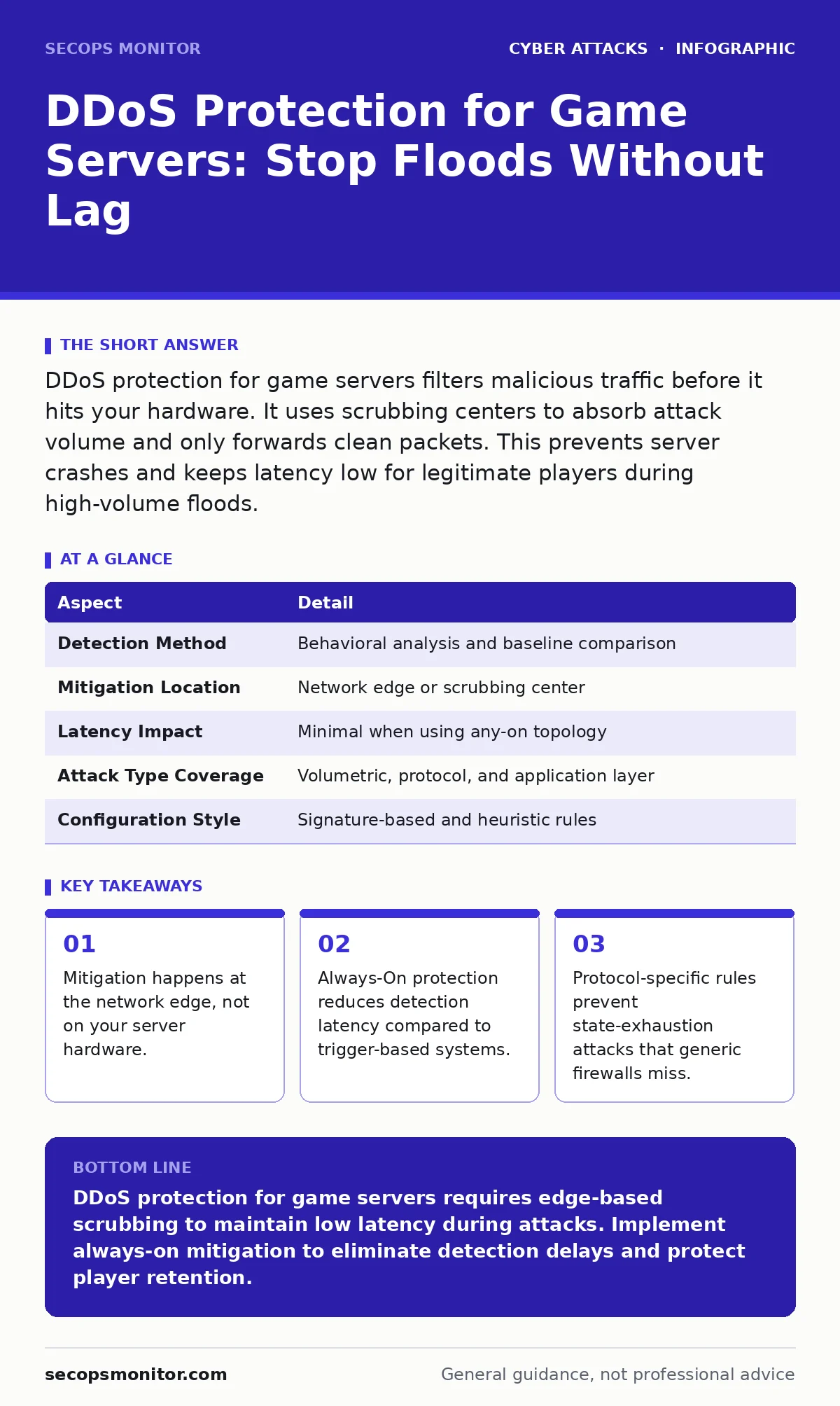
- Mitigation happens at the network edge, not on your server hardware.
- Always-On protection reduces detection latency compared to trigger-based systems.
- Protocol-specific rules prevent state-exhaustion attacks that generic firewalls miss.
DDoS protection for game servers requires edge-based scrubbing to maintain low latency during attacks. Implement always-on mitigation to eliminate detection delays and protect player retention.
Frequently asked questions
Does DDoS protection slow down my game server?
Always-on mitigation adds minimal latency, typically 10-20 milliseconds. Trigger-based protection causes higher latency during the detection phase.
Can DDoS protection stop application-layer attacks?
Standard volumetric protection cannot. You need deep packet inspection and protocol-specific rules to stop attacks that target game logic or state.
How quickly does mitigation activate?
Trigger-based systems take minutes to activate. Always-on systems protect traffic instantly, as all traffic is routed through scrubbing centers by default.
Do I need DDoS protection if my server is small?
Yes. Small servers are often targeted because they lack resources to absorb traffic. Attackers use automated tools that do not discriminate based on server size.
How this guide was produced: written by the SecOps Monitor editorial team with AI assistance, checked against the public references listed below, and reviewed when the facts change. See our editorial policy or report an error.