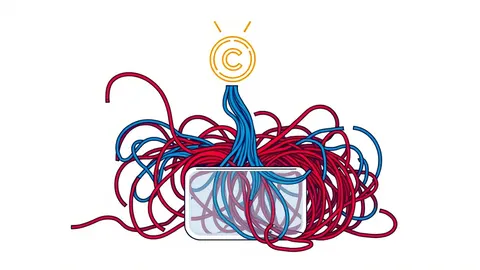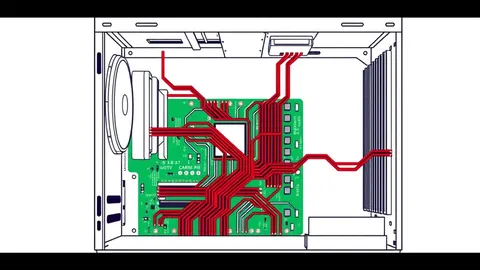
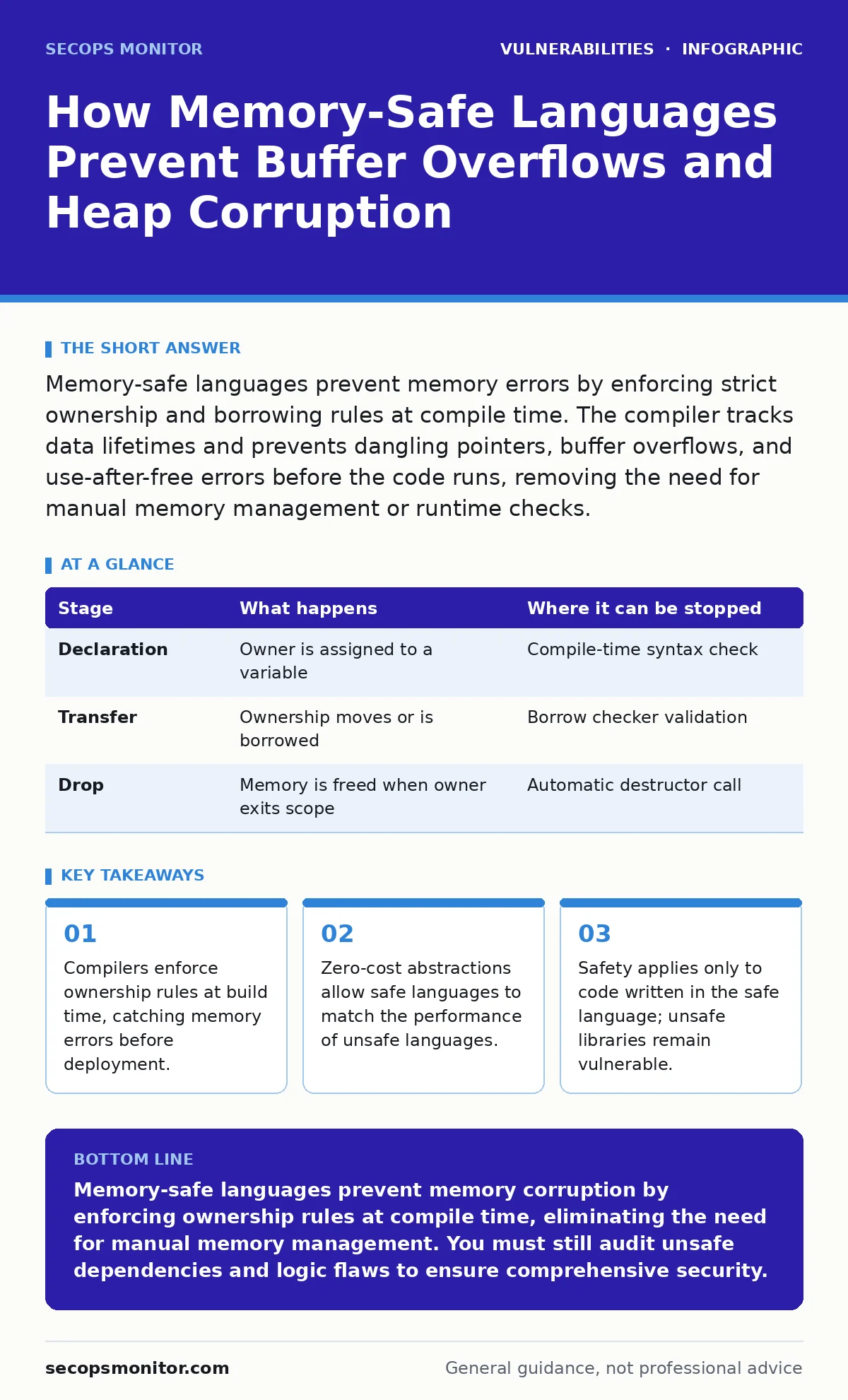
Memory-safe languages prevent memory errors by enforcing strict ownership and borrowing rules at compile time. The compiler tracks data lifetimes and prevents dangling pointers, buffer overflows, and use-after-free errors before the code runs, removing the need for manual memory management or runtime checks.
The Compiler as a Security Gatekeeper
Traditional systems programming relies on the developer to manually allocate and free memory. A single miscalculation leads to a buffer overflow or a use-after-free error. Memory-safe languages shift this responsibility to the compiler. You write code that follows strict rules about who owns data and how long it persists. The compiler verifies these rules before generating machine code. If the rules are violated, the build fails. This happens before the software ever reaches production.
This approach eliminates the most common class of memory corruption bugs. It does not rely on runtime checks that slow down execution. It does not require a garbage collector to scan memory periodically. The safety guarantees are structural and static.
Stage 1: Variable Declaration and Ownership Assignment
When you declare a variable, you assign it an owner. The owner is responsible for the data’s lifecycle. The language tracks this ownership through the scope of the code. If you pass the data to another function, you must explicitly transfer ownership or create a reference. The compiler ensures that only one part of the code owns the data at any given time. This prevents double-free errors where two parts of the program attempt to release the same memory block.
| Stage | What happens | Where it can be stopped |
|---|---|---|
| Declaration | Owner is assigned to a variable | Compile-time syntax check |
| Transfer | Ownership moves or is borrowed | Borrow checker validation |
| Drop | Memory is freed when owner exits scope | Automatic destructor call |
Stage 2: Borrowing and Lifetime Verification
You often need to use data without taking ownership. The language allows you to borrow the data. You can have many immutable references or exactly one mutable reference. You cannot have both simultaneously. This rule prevents data races and inconsistent state. The compiler calculates the lifetime of each reference. It ensures that no reference outlives the data it points to. If a function tries to return a reference to local data, the compiler rejects it. This stops dangling pointers before they can cause a crash or exploit.
Stage 3: Scope Exit and Automatic Deallocation
When a variable leaves its scope, the compiler automatically inserts code to free the memory. This happens deterministically. You do not need to call a free function. You do not need to manage a garbage collection pause. The memory is released exactly when the owner variable goes out of existence. This predictability is critical for real-time systems and operating system kernels. It ensures that resources are available when needed, not when a background collector decides to run.
Hidden Costs of Static Safety
The promise of safety comes with constraints on how you structure code. You cannot easily share mutable state between threads. You cannot store references in data structures that modify themselves. These restrictions force you to design software differently. You may need to clone data instead of referencing it. Cloning consumes CPU cycles and memory. You may need to use interior mutability patterns that add complexity to the codebase.
Imagine you are building a high-frequency trading engine. Every nanosecond counts. If your safe language forces you to clone large data structures to satisfy the borrow checker, your performance suffers. You might be tempted to use unsafe blocks to bypass the checks. This reintroduces the very vulnerabilities you sought to eliminate. The safety guarantee only covers the safe code. Any unsafe block is a potential entry point for attackers.
Limits of Language-Level Safety
Memory safety does not equal application security. It prevents memory corruption, not logic errors. A buffer overflow cannot occur, but a business logic flaw can still allow unauthorized access. You can still suffer from injection attacks, race conditions in file systems, or cryptographic misconfigurations. The language protects the memory, not the intent of the code.
Furthermore, most memory-safe languages allow you to mark code as unsafe. This is necessary for interacting with hardware, operating system kernels, or legacy libraries. If you call an unsafe function, you assume responsibility for memory safety in that block. A bug in that unsafe block can still corrupt memory. You must treat unsafe code with the same rigor as code in unsafe languages.
Integrating these languages into your workflow requires a shift in mindset. You cannot rely on dynamic application security testing (DAST) to find memory errors because they are eliminated at compile time. Instead, you must focus on threat modeling to identify logic flaws and design issues. The security testing shifts from finding memory bugs to verifying system architecture and data flow.
Dependency and Integration Risks
Even if your core application is written in a memory-safe language, your dependencies may not be. Many systems rely on libraries written in C or C++. These libraries are linked into your binary. If a vulnerability exists in a dependency, your safe language cannot protect you. A buffer overflow in a third-party library can still compromise your entire process.
This creates a new attack surface. You must manage dependency updates with extreme care. You cannot assume that using a safe language makes your supply chain safe. You must audit the unsafe code you link against. You may need to wrap unsafe libraries in safe interfaces to limit the damage of a potential exploit. This adds development time and complexity.
The Trade-off Between Speed and Safety
Developers often choose unsafe languages for performance. Memory-safe languages have closed this gap. Features like zero-cost abstractions allow you to write high-level code that compiles to efficient machine instructions. However, the borrow checker can sometimes prevent the compiler from optimizing code as aggressively as it could in an unsafe language.
In some edge cases, the compiler may generate extra checks or prevent inlining of functions. This can lead to measurable performance differences. You must benchmark your application to ensure it meets your requirements. If performance is critical, you may need to profile the code to identify where the safety mechanisms add overhead. You can then optimize those specific sections, potentially using unsafe code if necessary.
Moving Beyond Manual Management
The transition to memory-safe languages is not just a tool change. It is a cultural shift. You must learn new patterns for managing state and concurrency. You must accept that the compiler is a partner in security, not just a syntax checker. You must design your systems to work within the constraints of ownership and borrowing.
This approach reduces the burden on runtime security tools. You spend less time patching memory bugs and more time securing logic and data. It aligns with a secure software development lifecycle that emphasizes prevention over detection. By catching errors at compile time, you reduce the attack surface before the code is deployed.
Handling Emergency Scenarios
If a vulnerability is discovered in your system, the response depends on the type of flaw. Memory corruption bugs are largely eliminated. Logic bugs require different handling. You may still need emergency patching if a critical logic error is found. However, the patching process is often faster because you do not need to debug complex memory states.
The deterministic nature of memory management makes debugging easier. You can trace the flow of data ownership clearly. This reduces the time to identify the root cause of an issue. It also reduces the likelihood of introducing new bugs during the fix. The structure of the code enforces discipline that helps maintain stability under pressure.
Final Considerations for System Design
Memory-safe languages offer a powerful way to reduce vulnerability surface. They do not solve every security problem. You must still consider network exposure, input validation, and access controls. The language is one layer of defense. It works best when combined with other security practices.
You should evaluate your specific needs before adopting a new language. If your system interacts heavily with legacy hardware or C libraries, the benefits may be limited. If you are building new services with high reliability requirements, the benefits are significant. The key is to understand the mechanism and its limits.
Key takeaways
- Compilers enforce ownership rules at build time, catching memory errors before deployment.
- Zero-cost abstractions allow safe languages to match the performance of unsafe languages.
- Safety applies only to code written in the safe language; unsafe libraries remain vulnerable.
Memory-safe languages prevent memory corruption by enforcing ownership rules at compile time, eliminating the need for manual memory management. You must still audit unsafe dependencies and logic flaws to ensure comprehensive security.
Frequently asked questions
Can memory-safe languages prevent all types of software vulnerabilities?
No. They prevent memory corruption bugs like buffer overflows and use-after-free errors. They do not prevent logic errors, injection attacks, or configuration mistakes.
Do memory-safe languages run slower than C or C++?
Often no. Many memory-safe languages use zero-cost abstractions that compile to efficient machine code. Performance is comparable in most cases, though complex borrowing patterns can add overhead.
What happens if I use unsafe code in a memory-safe language?
The safety guarantees are suspended for that code block. You are responsible for ensuring memory safety manually. Bugs in unsafe code can still cause memory corruption and security vulnerabilities.
How do I handle third-party libraries written in unsafe languages?
You must treat them as potential vulnerabilities. Audit their code, keep them updated, and consider wrapping them in safe interfaces to limit the impact of any potential bugs.
How this guide was produced: written by the SecOps Monitor editorial team with AI assistance, checked against the public references listed below, and reviewed when the facts change. See our editorial policy or report an error.