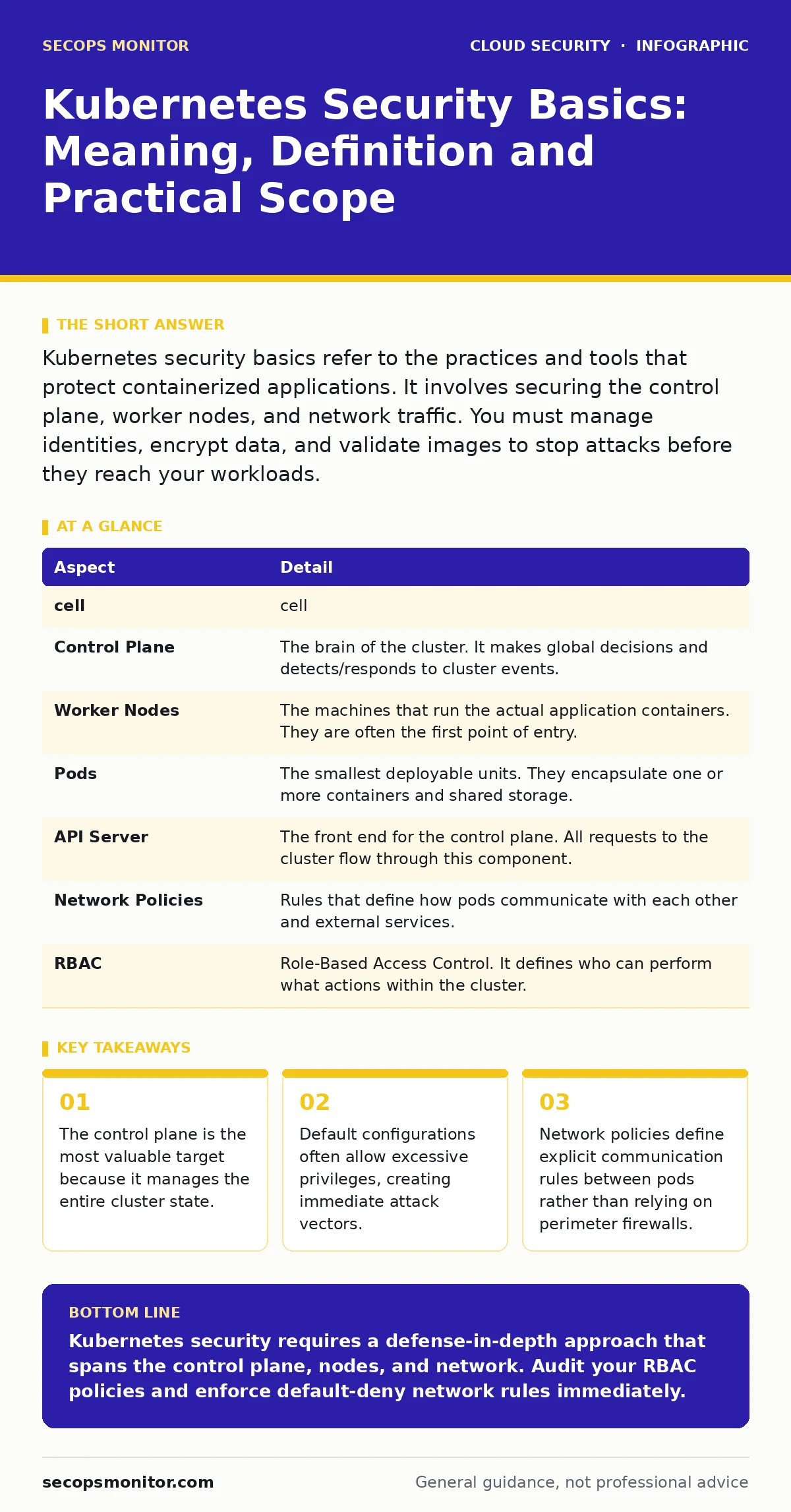
Kubernetes security basics refer to the practices and tools that protect containerized applications. It involves securing the control plane, worker nodes, and network traffic. You must manage identities, encrypt data, and validate images to stop attacks before they reach your workloads.
The Container Orchestration Analogy
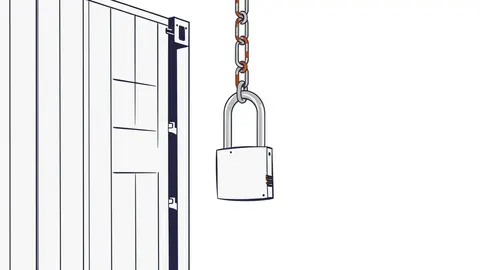
Imagine a large shipping port. Containers are the cargo units, and Kubernetes is the automated system that moves them around. Security in this context is not just about locking the cargo. It is about ensuring the cranes do not drop containers, the gate guards verify every truck, and the internal roads prevent unauthorized vehicles from reaching sensitive storage areas. If one part fails, the entire operation risks contamination or theft.
This analogy helps clarify why Kubernetes security is complex. You are not securing a single server. You are securing a dynamic environment where components appear and disappear constantly. The security boundary shifts with every deployment. You must protect the infrastructure that manages the infrastructure.
At a Glance: Core Components
| Aspect | Detail |
|---|---|
| cell | cell |
| Control Plane | The brain of the cluster. It makes global decisions and detects/responds to cluster events. |
| Worker Nodes | The machines that run the actual application containers. They are often the first point of entry. |
| Pods | The smallest deployable units. They encapsulate one or more containers and shared storage. |
| API Server | The front end for the control plane. All requests to the cluster flow through this component. |
| Network Policies | Rules that define how pods communicate with each other and external services. |
| RBAC | Role-Based Access Control. It defines who can perform what actions within the cluster. |
The Control Plane as the Crown Jewel
The control plane is the most critical component of your architecture. It exposes an API server that accepts requests to create, update, and delete resources. If an attacker compromises the API server, they gain full control over the cluster. They can inject malicious containers, exfiltrate data, or pivot to other systems.
Securing the control plane starts with authentication. You must ensure that only authorized users and services can send requests. This usually involves client certificates or token-based authentication. You also need authorization. Role-Based Access Control (RBAC) defines specific permissions for each user or service account. Without strict RBAC, a compromised low-level service account could escalate privileges to administer the entire cluster.
Hardening Worker Nodes and Hosts
Worker nodes run the actual workloads. They are exposed to the internet or internal networks where pods are accessed. If a container escapes its isolation, the attacker gains access to the host operating system. This is why node security is foundational.
You must keep the host kernel and container runtime updated. Vulnerabilities in these components can allow container escape. You should also restrict the capabilities granted to containers. By default, containers may have access to dangerous Linux capabilities. Removing unnecessary capabilities reduces the attack surface. Additionally, ensure that the container runtime is configured securely. This includes setting up proper file system mounts and resource limits.
Securing the Application Lifecycle
Security does not end when the container is running. It begins when the code is written and the image is built. A vulnerable image can introduce known exploits into your cluster. You must scan images for vulnerabilities before they are deployed. This process, known as image scanning, checks against databases of known security flaws.
You should also verify the integrity of images. Using image signing ensures that the image has not been tampered with since it was built. Admittance controllers can enforce policies that block unsigned or vulnerable images from being scheduled. This shifts security left, catching issues before they reach production.
See also: Federated Identity Explained: How SSO Reduces Attack Surface
Network Segmentation and Policies
By default, Kubernetes allows all pods to communicate with all other pods. This flat network model is dangerous. If one pod is compromised, the attacker can move laterally to other services. Network policies change this by defining explicit allow or deny rules.
You should implement a default-deny policy. This means no traffic is allowed unless explicitly permitted. You then create policies to allow specific communications, such as a web server talking to a database. This limits the blast radius of a compromise. You must also secure external traffic. Ingress controllers manage how external requests enter the cluster. They should enforce TLS and validate requests.
Common Misconceptions and Errors
Many teams believe that securing the perimeter is enough. This is a fundamental error in Kubernetes. The perimeter is porous. Workloads move dynamically. You must assume that an attacker is already inside. Another common mistake is ignoring secrets management. Storing passwords or API keys in plain text within images or configuration files is a major risk. You should use a dedicated secrets manager or Kubernetes secrets with encryption at rest.
People also often neglect audit logging. Without logs, you cannot detect or respond to incidents. You must enable audit logging on the API server and ensure logs are shipped to a secure, immutable storage location. This allows you to reconstruct events after a breach.
Integrating with Broader Security Strategies
Kubernetes security does not exist in a vacuum. It interacts with identity management, incident response, and infrastructure design. For instance, managing identity sprawl becomes difficult when every pod has its own service account. You need a strategy to manage these identities centrally. Similarly, cloud incident response plans must account for the ephemeral nature of containers. Forensics are challenging when nodes are terminated automatically.
You should also consider immutable infrastructure principles. Instead of patching running nodes, replace them with new, hardened instances. This reduces the risk of configuration drift and ensures a consistent security baseline. Finally, protect sensitive data using confidential computing techniques if you handle highly regulated information. This ensures data is encrypted even while in use.
Key takeaways
- The control plane is the most valuable target because it manages the entire cluster state.
- Default configurations often allow excessive privileges, creating immediate attack vectors.
- Network policies define explicit communication rules between pods rather than relying on perimeter firewalls.
Kubernetes security requires a defense-in-depth approach that spans the control plane, nodes, and network. Audit your RBAC policies and enforce default-deny network rules immediately.
Frequently asked questions
Do I need a separate firewall for Kubernetes?
You should use Kubernetes Network Policies for internal traffic segmentation. External traffic should be managed by cloud provider firewalls or dedicated load balancers.
How do I prevent container escapes?
Keep the host kernel and container runtime updated. Drop unnecessary Linux capabilities and run containers as non-root users.
Is RBAC enough for access control?
RBAC controls what users can do within the cluster. You still need authentication mechanisms like OIDC or certificates to verify user identities before RBAC is applied.
What is the biggest risk in Kubernetes?
Misconfiguration is the largest risk. Default settings are often insecure. Attackers exploit overly permissive RBAC, exposed APIs, and unpatched vulnerabilities.
How this guide was produced: written by the SecOps Monitor editorial team with AI assistance, checked against the public references listed below, and reviewed when the facts change. See our editorial policy or report an error.